A Soldier’s Faith
When Jesus mentions a name and thereby cites that person’s story, we ought to dig a little deeper to discover the message amidst the tale. He told His unbelieving neighbors in Galilee that a prophet has no honor in his hometown, and then reminded them: “And there were many in Israel with leprosy in the time of Elisha the prophet, yet not one of them was cleansed—only Naaman the Syrian” (Luk 4.27), who was “highly regarded, because through him the Lord had given victory to Aram [a Gentile nation]. He was a valiant soldier…” (2Kin 4.1). He wasn’t a believer or follower of God and yet God used him to further His kingdom. So much so that Naaman’s name is but one of the few that left the lips of our Lord and Savior and were written in the pages of the gospels for our edification.

Why is it that soldiers know faith whether they are Christ-followers or not? “Faith comes from hearing the message” (Rom 10.17) means that people must know what it means to listen. Soldiers do not act without orders and they cannot receive orders if they do open their ears. “Faith by itself, if it is not accompanied by action, is dead” (Jas 2.17)—soldiers know that an order received is an order obeyed. When you hear it, you are accountable to doing it. “And without faith it is impossible to please God, because anyone who comes to Him must believe that He exists and that He rewards those who earnestly seek Him” (Heb 11.6). Finally, a soldier, whether he is a believer or not, hears and obeys because he knows that it is his duty and that his service will be rewarded, whether it is in this life through the memory and adoration of all whom he has served or in a glory that far exceeds the medals of this world. Naaman had faith enough to listen to a slave girl’s wisdom, to obey a crazy prophet’s command, and to believe he would be healed. We all could learn a lot from soldiers.
A Soldier’s Duty
Naaman was cleansed of his leprosy only after he argued the logic of the orders he received. Elisha had simply told the soldier to bathe seven times in the Jordan River, and Naaman replied, “I thought he would surely come out to me and stand and call on the name of the Lord his God, wave his hand over the spot and cure me of my leprosy. Are not… the rivers of Damascus, better than any of the waters of Israel? Couldn’t I wash in them and be cleansed?” (2Kin 5.11-12). As a soldier in the Army I’ve been told to do a lot of things I considered illogical, and sometimes downright stupid; but because I received the message, I was expected to obey it. As Tennyson writes:Theirs not to make reply
Theirs not to reason why
Theirs but to do and die.
Soldiers can question unethical commands but not always illogical ones. We do as we are told whether we believe it makes sense or not. Perhaps there’s a lesson about faith there?
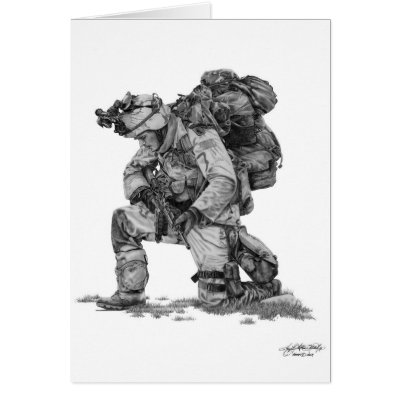
Naaman’s servants were wise enough to admonish their leader: “If the prophet had told you to do some great thing, would you not have done it? How much more, then, when he tells you ‘Wash and be cleansed.’” We have no problem with God using us to part the waters, but get angry when we have to provide water for His people. We love it when God uses us to ridicule 400 prophets of Baal, but ask to die when he feeds us by ravens. We flock to Jesus when He turns water to wine, feeds five thousand, or raises the dead, but abandon Him when He asks us to drink of His blood, eat of His flesh, and leave our dark ways behind us. Like soldiers, we love to do that which is seen by all, and slack off on that which is seen by only God.
Bathing seven times in the Jordan could be like reading the Bible seven times a week, memorizing seven verses a month , praying seven minutes a day, sharing our faith with seven people a month, listening to seven minutes of preaching a day,meeting with seven different people a year, praising God seven seconds of every minute, or any other seven menial habits you’d rather not do. We all wish God would just wave His hand and say “Be cleansed,” but that’s not our God. He expects more out of His soldiers.
A Soldier’s Reward
Naaman offered Elisha a financial gift for the prophet’s service to God, but Elisha turned him down. Later, Gehazi, Elisha’s servant, went after Naaman and conned him out two talents of silver and two sets of clothing. When Gehazi returned to his master, he lied about his whereabouts, but Elisha replied, “Is this the time to take money, or to accept clothes… Naaman’s leprosy will cling to you and to your descendants forever” (2Kin 5.26-27). Many of us are willing to pay others for their service to God, while many others are willing to accept payment for their service to God; but few are those who serve freely, without any desire for reciprocation.
Soldiers are paid by the taxes of those they serve and ought to be “content with [their pay]” (Luke 3.14). When we typically talk about men and women in the military, we say that they are in "the service." Soldiers serve, they lead, they fight, they die, they live so that others might be able to enjoy peace and security. When soldiers begin to demand more pay for the service they provide, those they serve can become victims of fear rather than supporters of freedom. This is why Jesus says that those who serve should consider themselves "unworthy servants who have only done their duty" (Luk 17.10) because duty does not demand more than it deserves.
Duty and service goes hand-in-hand for soldiers, just as they should for Christians. That's the first lesson I learned from Naaman. The second is that faith requires obedience, not only to the grand commands but also to the mundane disciplines. The last lesson is that soldiers are unworthy servants who have only done their duty. If this is my attitude, my mission when serving Jesus, then maybe my name will also be upon the lips of my Lord.


