Saturday, November 10, 2012

If You are Willing and Obedient

I've been struggling with completing my quiet times these past few weeks, months, well, really the past year. My mindset has been that I'm going to deploy for 9 months and will have nothing else to do but work and study my Bible, so why not enjoy now what I can't do there? God told me something different the other day.

Now, I'm not one of those spiritualists who see angels in smiles and messages from God in bowls of Cheerios, but I had a strange thing happen to me yesterday. I hadn't read my Bible in almost two weeks and was feeling pretty guilty, but it was Friday, it was my birthday, and it was only 40 days before I leave out for Afghanistan, so I was going to enjoy some TV. But I couldn't get my mind off the fact that I should read, so I just turned the TV up and concentrated on the show in front of me.

Then I heard a knock at the door. I tried to hide but the TV was too loud and I could see the eyes peering in through our window watching me pretend like I wasn't home. I slowly opened the door and asked the two ladies if I could help them. They said, "We just want to encourage people to read the Bible." Then they left. Well, I got the hint, turned off the TV, and opened up to where I left off two weeks ago. Here's a snippet of what I read:

"Even though you make many prayers, I will not listen [unless you] learn to do good; seek justice, correct oppression.... If you are willing and obedient, you shall eat the good of the land" (Is 2.15-20). I am willing but I haven't been obedient. To those who aren't even willing, God says "They have become a burden to me; I am weary of bearing them." Lord, though I repent of being disobedient, please never allow me to become unwilling.


INCREASING QUALITIES (part 2)

"Make every effort to supplement your faith with virtue, and virtue with knowledge, and knowledge with self-control" (2Pt 1.5).

Faith comes from hearing the Word of God and is simply defined as "being fully convinced that God has the power to do what He has promised" (Rom 4.21). But faith, like milk to a newborn baby, is just the first of many steps to maturity. It is Peter who actually writes that Christians should crave God's Word like infants longing for liquid sustenance "so that you may grow up in your salvation" (1Pt 2.2). But if there's one thing I've learned about babies, it's that they will accept milk from anyone who offers it.

Surely, you've noticed that children, if they are hungry, will eat food given to them by anyone. So also, hungry Christians who lack the perishable skill of discernment, will accept the preaching of God's Word as truth no matter who presents it. Paul warns the Ephesians that if they do not get equipped in the work of God, they will "be children, tossed to and fro by the waves and carried about by every wind of doctrine" (4.14). Basically, immature Christians will believe anything that sounds true and then change their beliefs if what sounds true no longer seems to be so.

Immature Christians also do not "endure sound teaching but having itching ears they wil accumulate for themselves teachers to suit their own passions" (2Tim 4.3). Basically, they have bountiful amounts of knowledge but it isn't buttressed by virtue or self-control, so they just find teachers who will agree with what they want to believe about God. So how do we increase from faith to godliness to love? Well, it takes one simple process.....


Thursday, October 18, 2012

INCREASING QUALITIES (part 1)

"For if these qualities are yours and are increasing, they keep you from being ineffective or unfruitful in the knowledge of our Lord Jesus Christ" (2Pt 1.8).

Peter lists eight qualities of a person who is "partaking in the divine nature: "faith, virtue, knowledge, self-control, perseverance, godliness, brotherly kindness, and love," and reminds us that they are developed in increasing measure and are not simply inherited when we first utter a prayer. For instance, the first of these qualities, faith, is often believed to be a gift from God, an act of mere acceptance. "God you love me enough to sacrifice your Son. I accept that. The end." But that's not the meaning of faith.

"Faith is being sure of what you hope for and certain of what you do not see" (Heb 11.1). Nearly every Christian understands this verse to be the definition of faith and yet they often misinterpret that definition. Notice that faith is not "what you hope for" or "what you do not see." We call that "hope." Faith is "being sure" and "certain" of your hope. What's the difference? If you believe I'll give you money tomorrow even though I haven't promised it, then that's hope. If you trust that I will keep my word to you by presenting a promised sum, then that's faith.

"Faith comes from hearing the message and the message is heard through the word of Christ" (Rom 10.17). More Christians know Hebrews 11.1 than know of this verse, even though this clearly defines the source of our faith: God's word. Am I basing my faith in God on what I hope He will do or on what He has promised to fulfill? That's just the first quality of a growing Christian and yet how many of us start off on the right premise?


Sunday, October 14, 2012

Am I a Child of God

"By this it is evident who are the children of God, and who are the children of the devil: whoever does not practice righteousness is not of God, nor is the one who does not love his brother" (1John 3.10).

Almost perfectly in the middle of the first epistle of John is the above verse which not only summarizes the book, but also the Biblical conditions that prove I am a child of God. John writes about practicing righteousness: "By this we know that we have come to know Him, if we keep His commandments" (2.3). Righteousness is the fruit of obedience and is the first indicator that we have come to known God. The second is like it: "We know that we have passed out of death into life, because we love our brothers" (3.14). The second evidence produced from becoming a child of God is a love for other children of God. The question is, what does that love look like?

"By this we know that we love the children of God, when we love God and obey His commandments. For this is the love of God, that we keep His commandments" (5.2,3). Very simply, we love the children of God by first obeying His commands (the first piece of evidence) and by helping them do the same (thereby reproducing the first piece of evidence in their lives). Jesus summed the entire Bible up in these same two commands: "Love The Lord your God... [and] love your neighbor as yourself" (Mt. 22.37-39).

If Christians would believe the simple truth of this statement, discipleship would be real easy: we love God by obeying His commands and we love His people by helping them to do the same.


AM I OF US

"They went out from us, but they were not of us; for if they had been of us they would have continued with us. But they went out that it might become plain that they were not of us" (1John 2.19).

Some Christians have a hard time when people leave their fellowship. "What did we do wrong? Is our Bible study too hard? Are our songs too traditional? Does my breath stink?" John puts it very simply, they left because they were not "of us." In context, John is writing about antichrist, or false teachers and prophets, who came from the fellowship of true believers but left when their messages mutated the true Gospel of Jesus Christ. The problem is that most Christians can't tell the difference between those who are "of us" and those who are not. But there is one simple indicator.

"Whoever knows God listens to us; whoever is not from God does not listen to us. By this we know the spirit of truth and the spirit of error" (1John 4.6). This is obviously a very dangerous verse when repeated by those who are not "of us" but a very true statement when announced by those who are "of us." The question must then first be asked is this: am I "from God?"
"By this we know that we abide in Him and He in us, because He has given us of His Spirit" (1John 4.13). Those who are from God will bear the fruits of the Spirit (Gal 5). They will know and understand the Word of God (1Cor 2). And they will testify to the Truth (John 15).


Saturday, October 6, 2012

TRAINING FOR BIBLE STUDY

"Though by this time you ought to be teachers, you need someone to teach you" (Heb 5.12).

I talked with some fellow believers the other day about Bible study habits. They said that we ought to taper down our study or change it altogether since no one is actually completing it before they arrive to Bible study (in essence, our Bible study was just a Bible discussion). I said that's like blaming the car for not running when it's out of gas. The problem isn't the tools we use to study the Bible but rather the habits of those who do not study the Bible.

"Therefore if anyone is in Christ, he is a new creation. The old has passed away; behold, the new has come" (2Cor 5.17). Of course we've all heard that people are creatures of habit. That is, we have our schedules and we like to keep them: bedtime, exercise, television shows, nightly rituals, etc. Those who claim to know Christ and yet still live as if they did not, are probably not actually "new creatures," if the idiom of "creatures of habit" is true. Therefore, if we want to train disciples, we must begin with their habits.

The problem is that people become accustomed to trends. If you always eat before fellowship, they expect food. If you always sing, they expect music. If you never expect then to study the Bible then they won't study the Bible. If given the choice between eating candy or vegetables, I will always choose the sweeter, easier of the two. If given the choice between ingesting spiritual milk or solid food, which do you think most Christians will imbibe?

"Solid food is for the mature who by constant use have trained themselves to distinguish good from evil" (Heb 5.14). The old saying is true: you can lead a horse to water but you can't make him drink. In which case you either need a new horse or you just wait until he gets thirsty enough to drink.


Friday, September 21, 2012

CONTAGIOUS CHRISTIANS

"If someone carries holy meat... and touches... bread or stew or wine or oil or any kind of food, does it become holy? The priests answered 'No....' If someone who is unclean... touches any of these, does it become unclean? The priests answered... 'It does....' So it is with this people" (Hag 2.12-13).

Have you ever thrown a raunchy pair of sweat-stained underwear into a basket of clean clothes? Would you, or your significant other, still consider those clothes "clean?" If we reverse that and throw a clean sock into a pile of freshly used jockstraps, will the dirty clothes absorb the clean sock's purity?

"With respect to [living in sensuality, passions, drunkenness, orgies, and drinking parties] they are surprised when you do not join them in the same flood of debauchery; and they malign you" (1Pet 4.3,4). Sin is contagious, righteousness is not. We Christians might influence our surroundings but we cannot transfuse our holiness into their bloodstream. However, their fleshly desires, covetnousness, gossip, and hatred are so akin to ours that we could easily find ourselves becoming just like them in our behaviors and our mindset. We cannot infect righteousness into others but we can help them get the "virus."

As disciple makers, we should realize that we are more apt to pass along our sins than we are our righteous deeds. People will mimic what they can see and hear: our righteous deeds, speech, and interactions. But mimicing holiness will not make one holy. "As obedient children, do not be conformed to the passions of your former ignorance, but as He who has called you is holy so be holy in all your conduct.... Having purified your souls by your obedience to the truth... love one another earnestly from a pure heart" (1Pt 1.15, 22).

Righteousness (holiness) requires training (2Tim 3.16), but not the external kind that leads to mimicry, but the internal devotion of a heart that touches the holy fold of the Father's robe. We cannot merely pass on this holiness by our presence but we can lovingly provide the training they need to learn to be obedient to the truth.


Sunday, September 16, 2012

Three Bible Study Methods

"Now the Bereans were of more noble character than the Thessalonians, for they received the message with great eagerness and examined the Scriptures every day to see if what Paul said was true" Acts 17.11.

All those who want to study God's Word hear it with great eagerness but how many of us actually study it? My own studies have led me to identify three types of Bible students: the Thessalonians, the Berean, and the Timothians. The differences may seem obvious, and I hope, very distinct.

The Thessalonians listen to the Word of God like people watching a SITCOM: it's entertaining, you remember some "lesson" from it, and you make assumptions that everyone acts or believes exactly as they do. Thessalonians say "amen," have their favorite preachers, and then live the rest of the week as if the Word was just "a word," because they heard it from a person rather than their God.

The Bereans were more noble than the others because they went back to the Word to examine the validity of what they heard. They are like high schoolers who attend class, take notes, study their teacher's commentary in order to pass the test, and retain only as much as is taught again. Everything they learn originates from someone else. As Paul said of these types: "By this time you ought to be teachers, you need someone else to teach you the elementary truths of God's Word" (Heb 5.12).

Timothians "study to show [themselves] approved...workmen... [who] rightly handle the Word of Truth" (2Tim 2.15). Jesus said that the problem with the Pharisees wasn't that they didn't diligently study the Scriptures, but that they did not study it for the right purpose: to know Him (John 5.39,40). Timothians are better than the Thessalonians and Bereans not simply because they hear the word from God and put it into practice, but because they study for the right reason: to know He who identifies Himself with His Word.

All who follow Christ are disciples of Jesus, that's not the issue. The question is: what kind of disciple will I be? All of us will hear the Word of God. The question is: what type of Bible student will we be?

Thursday, September 6, 2012

Too Busy to Know God

"Not everyone who says to me, 'Lord, Lord,' will enter the kingdom of heaven, but only the one who does the will of my Father who is in heaven" (Mt 7.21).

This week I'm on a trip to Fort Knox to talk human resource stuff with Army experts. Before I came I thought that I should find out if there were any other disciples up here with whom I could fellowship. Then I thought: "I won't have time." God thought otherwise as I ran into a godly man who shares many similar friends with me. As Andy White and I ate lunch together, I realized why God put us together.

I've been struggling lately with being "too busy," an excuse I have heard often and always thought was simply people putting the love of the world before their love for God. I felt like I had no time to do what I knew God wanted me to do for Him. Without knowing my struggles, Andy serendipitously shared with me Matthew 7.21-23 wherein "believers" explain to God that they should get into heaven because they "prophesied in His name, cast out demons in His name, and do many might works in His name." God replied, "I never knew you; depart from me, you workers of lawlessness."

How many "might works" have I done that qualify me for Heaven? How many times do we provide the lists of tasks we ought to do for God rather than listen to Him explain our marching orders? I think, "I don't have time to do what I think God wants me to do," but all the while God has given me the time to do exactly what He wants. The problem is that I haven't asked what that is: I've just assumed that I knew. May God open my ears, my heart, and my mind so that I might know Him and know the works He has called me to do.


Thursday, August 30, 2012

Asking or Demanding

"You want something but don't get it. You kill* and covet, but you cannot have what you want. You quarrel and fight. You do not have, because you do not ask God. When you ask, you do not receive,* because you ask with wrong motives,* that you may spend what you get on your pleasures." (Jas 4.2,3)

Like me, you've probably have had situations where subordinates have demanded something from you rather than ask for it: whether it was time off from work, some equipment, personnel changes, or whatever. You probably denied it, not because you were unwilling to meet their need but because they made a demand rather than a request. This happened to me this week, and then today I read this passage of Scripture:
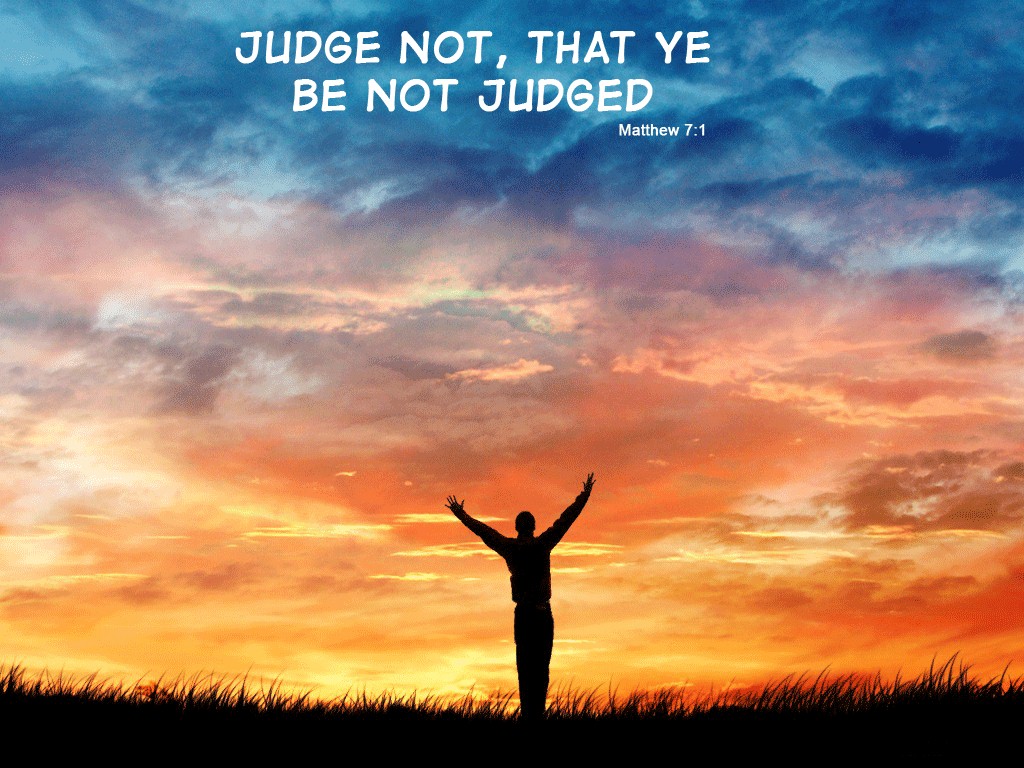
"Judge not that you be not judged. For with the judgment you pronounce you will be judged, and the measure you use it will be measured to you" (Mt 7.1-2). I thought, "God, but as a supervisor it is my responsibility to judge." Then I realized, Jesus wasn't telling us not to judge but was warning us that how we judged others would be the measure He used to judge us. Then I read a few verses later: "Ask, and it will be given... for everyone who asks receives." When was the last time I asked God for anything rather than demand from Him some outcome?

When I examine my prayer life I typically say, "Give me this, forgive me that, smite him or her, or teach me something I want." The motivation for my asking is an expectation that God will respond to my beck and call. God showed me today that I do not have because I do not ask, I demand. Thank you God for showing me my faults that I might become more like you.


Wednesday, August 29, 2012

Mercy and Justice

"Woe to you, teachers of the law and Pharisees, you hypocrites! You give a tenth of your spices, mint, dill and cummin. But you have neglected the more important matters of the law: justice, mercy and faithfulness" Mt 23.23.

Zechariah says that "true justice" is to "show mercy and compassion to one another" (7.10) which makes some people assume that being just means to show mercy fairly to each person or that justice and mercy are actually opposites. I just came back from nearly 30 days of training at the Army's National Training Center in Ft Irwin, CA and have learned a poignant lesson concerning justice and mercy: one applies to the individual while the other affects the masses.

A soldier decided that she didn't want to heed the same rules as the other members of the team and wanted me to show her mercy because she was an individual. However, showing mercy to this individual would've hurt the rest of the team because it would not have been fair to them. Applying justice to a disobedient person affects the rest by discouraging reciprocating actions: this is why God demands an eye for an eye. Giving mercy to an individual restores a relationship with that person but not with a group: this is why Jesus says to turn the other cheek when offended. We must be careful not to confuse one for the other.

True justice contains mercy because the "judge" knows how to forgive the individual while still punishing the sin. If there is no punishment for sin, then there is no justice. If there is no forgiveness of sin, then there is no salvation. If there is no justice then there can be no salvation.


Saturday, July 28, 2012

Hearing His Voice, Seeing His Hand

"Your ears will hear a voice behind you saying, 'This is the way, walk in it" (Isa 30.21). You know that would be totally awesome to hear God say, "Mike, turn here, don't go there, leave that person alone, seek her out, live right here." And yet, more often than not, there's silence.

Some Christians say, "God told me to talk to so and so about Him," but for me there is seldom a giant arrow over a person's head saying "Evangelize me!" Instead, I must be rejected by ten in order to find one willing. Sometimes God seems to tell people where to live or what car to buy but the rest of us have to use wisdom to make prayerful and sensible decisions as stewards of what He's given us. Sometimes God tells people where to go to Church, what job is best suited for them, what stock to invest their money in, or any number of important life events that are the cause for most of our worry. Yet, most of us have to learn to trust in our decisions when no voice guarantees our voice.

You see, the Israelites who heard God say, "This is the way" had a problem. God told them that "because [they] despise this word and trust in oppression and perverseness" (Is 30.12) they would be destroyed along with those who do not know God. Christians want to hear God's voice but they don't want to read His Word. We want to see His hands working miracles but we don't to be His hands serving people. We want Him to tell us the way in which to walk, but we don't always want to walk in it. May I learn to trust His Word that I might hear His voice and obey His commands that I might see His hands at work in this world.


Monday, July 16, 2012

The Sin of Security

 
"Manasseh was 12... when he began to reign... and he did what was evil in the sight of the Lord." Manasseh was the son of Hezekiah, a king who "did what was right in the eyes of the Lord." So how was it that Hezy's son turned out so bad? When Hezekiah was on his deathbed, he begged God for salvation and the Lord granted him 15 additional years (during which time Manasseh was born). Shortly after his "salvation experience,," Hezy flaunted his wealth to some visiting Babylonian ambassadors. Isaiah rebuked the king with these words: "Behold, the days are coming when all that is in your house... shall be carried to Babylon." Hezekiah thought about this foreboding prophecy and chipperly replied: "The word of the Lord that you have spoken is good... Why not, if there will be peace and security in my days" (2Kings 20).

I am saved by the grace of God and am heaven-bound no matter what I do or do not do here after the day of my salvation! So what if my sinful actions lead others astray or if my lack of obedience precludes me from training others to follow Jesus: at least there will be peace and security in my days! Because Hezekiah cared so little about future generations, his son became the most evil king Judah had ever known. If I care more about my own salvation than I do for the spiritual wellbeing of those I love, then what will become of those who follow me?

Jesus tells us a parable about people who hide their talents because they are afraid of what God will do if they lose it. God takes that talent away and gives it to those willing to share their talents with others. We should be secure in our salvation but not so secure that we are afraid to lose it.


Tuesday, July 3, 2012

Rerooting

"Once more a remnant of the house of Judah will take root below and bear fruit above" (2Kin 19.30). The hardest thing about moving every year, or two, or three, is the reestablishing of our foundations. Who will be our friends, what church is "home," which of our neighbors do we trust, and how will I get to see my family in the daylight without getting fired. Starting over is tough, because most people are already rooted and don't really like to add newcomers into their grove because it crowds their already deeply rooted web of friends, neighbors, church, and community.

Of course many Christians confuse Jesus' commands concerning a branch and the vine (John 15) with multiple other references by God discussing a tree and its roots. They say, "If you just remain in the vine, you will bear fruit because all you need is Jesus, not friends, family, community, or a good fellowship group." Using one analogy to decipher another works about as well as using a math problem to explain a story.

So my prayer is that God might set our roots deep into the soil of El Paso and Fort Bliss, Texas. For however long we are here, I pray that Jesus might provide me trustworthy neighbors, loving friends, and a boss who cares more about his soldiers than his evaluation. May our roots be deep so that our fruit will be ripe.


Tuesday, June 12, 2012

Everything That Does Not Come From Faith is Sin (3 of 3)

God's Judgment or Man's Convictions

I remember once telling my friends they shouldn't listen to music with bad lyrics because it was against God's will. I told others that God wanted them to read the Bible a certain way. Others told me that my baptism wasn't valid, or that my clothes were inappropriate, or that my car was too new, or my hair too long, or my Sundays too void of silence, or that I simply was wrong because I did not do as they did.


"The faith which you have, have as your own conviction before God. Happy is he who does not condemn himself in what he approves." I had the hardest time understanding this verse before I studied the difference between convictions and faith. You see "faith comes from hearing the message" while convictions derive from our understanding of His message. When people say that "faith is personal," what they really mean is that each person's convictions are personal because all Christians' faith comes from God's word, but each believers' convictions are created by an interpretation of this common faith.

Of course, it is easy for immature Christians to exclaim, "'Why do you pass judgment on your brother?' You shouldn't judge another person's sin since each of us have our own faith." That's like disobeying gravity since we are all different weights! The problem is that Christians like to judge each other based on their convictions and not our shared faith. That is, we condemn those who do not do or believe as we do rather than rebuke those who do not do or live as God commands.


"So then each of us will give an account of himself to God" (Rom 14.10-23). In many ways, Jesus' command to make disciples "teaching them to obey everything I have commanded you" is God's way of preparing us for this individual accounting we will give to God. A wise young Christian will adopt the convictions of his or her elders while a loving, mature believer will teach those young people the difference between a conviction and faith. Unfortunately, many of us won't learn the difference until we are enduring this accounting....


Tuesday, June 5, 2012

Everything that Does Not Come from Faith is Sin (part 2)

Weak and the Strong

When it comes to having convictions that restrain you from sinning or encourage righteous deeds, who would you consider to be "stronger," those with many convictions or those with few? "One person believes he may eat anything (few convictions), while the weak person eats only vegetables (many convictions).... One person esteems one day as better (many)... while another esteems all days alike (few)." In Scripture we find that those who are "weak," or immature in their faith, have many convictions, while those who are strong, or mature, adopt fewer convictions.


This makes sense when you consider the fact that parents provide restraints for their children which serve as imposed convictions that keep them from screwing up their lives. No drinking, no smoking, no hanging out with "those people," clean your room, go to school, do your chores, and attend church on Sunday. But as our children get older, we realize that responsibility comes only with the freedom to individually choose what "right looks like." The same is true for we who are in Christ.


And therein is the problem: our convictions are not always self-imposed. Paul warns us that those who exercise their freedom "despise the one who abstains, and... [the] one who abstains pass judgment on the one who eats" (Rom 14.1-5). Sometimes I find myself looking down my nose (despising) at those who shun violent games and movies or think Sundays are holy. Other times, I shake my head (judgement) at those who "drink socially" or believe that camping is a spiritual endeavor. So how do we mature in our faith without becoming weak because of our convictions?


Wednesday, May 30, 2012

Everything That Does Not Come from Faith is Sin

Convictions

Romans 14.23 is a troubling verse if you consider the implications it addresses: if my actions are not aligned with my faith, that's sin, and sin begets death. In this passage, Paul is addressing the Romans about a matter that is of great importance to we who claim Christ as our Savior: convictions. A "conviction" is a firmly held believe, something we perceive as true even though others may not agree. For instance, some Christians are convicted not to drink or smoke or play nonviolent video games, while others are convicted to worship God on Sundays sitting in pews or read their Bible before every meal and pray every morning. But we must be careful not to confuse "convictions" (what we believe) with "faith" (what God says).

"And when He comes, He will convict the world concerning sin, righteousness, and judgment" (John 16.8). Our convictions come from our faith and are inspired by the Holy Spirit working individually within believers to inspire us to live righteously as we avoid sin. Therefore, our convictions can be bilaterally categorized into those which keep us from wrongdoing (God's "do not"commands) and those that implore us to live justly (God's "do" commands). For instance, God says "do not get drunk," not "do not drink," but our conviction is to avoid "drinking" in order to prevent "drunkenness." God commands us not to forsake fellowship and so our conviction is to gather weekly under one roof. However, we must be careful not to mistake the conviction for the commandment.


"So then each of us will give an account of himself to God. Therefore, let us not pass judgment on one another... but rather decide never to put a stumbling block... in the way of a brother" (Rom 14.13). Paul's convicting language in this chapter mirrors Jesus' own warning that it is better to tie a millstone to your neck and dive in a river than cause your brother to sin. And yet do we consider why we hold certain convictions as dear, if not more so, than the Word of God? I'm taking the next few days to examine my own convictions and to ask the question: do they come from faith or do they usurp my faith?


Tuesday, May 15, 2012

FOREST FOR THE TREES

I cdnuolt blveiee taht I cluod aulaclty uesdnatnrd waht I was rdanieg. The phaonmneal pweor of the hmuan mnid aoccdrnig to rscheearch at Cmabrigde Uinervtisy porves taht it deosn't mttaer in waht oredr the ltteers in a wrod are, the olny iprmoatnt tihng is taht the frist and lsat ltteer be in the rghit pclae. The rset can be a taotl mses and you can sitll raed it wouthit a porbelm. Tihs is bcuseae the huamn mnid deos not raed ervey lteter by istlef, but the wrod as a wlohe. Amzanig huh? Yaeh and I awlyas thought slpeling was ipmorantt.

Funny how you were able to read that, isn’t it? Even though Jesus says, “Not the smallest letter… will by any means disappear from the Law until everything is accomplished” (Mt 5:18), Paul reminds us that Christ has “made us competent as ministers of a new covenant- not of the letter but of the Spirit; for the letter kills, but the Spirit gives life” (2Cor 3:6). It’s the meaning of a word that matters most and not it’s spelling. It’s the Spirit who teaches God’s word that matters most and not it’s lettering. When we read, we need to ask, “God what does this mean” rather than wonder, “should I believe this?” Study to show yourself approved but don’t miss the forest for the trees.


Tuesday, May 1, 2012

NAMES AND NUMBERS

One of my multitude of tasks as a Human Resource officer (Adjutant General Corps) in the Army is personnel accountability and strength reporting (PASR). The difference in PA and SR is the title of this thought: names and numbers. For instance, say we have 4000 slots to fill in a Brigade. I don’t really care who the person is as long as someone fills the spot: that's strength reporting. But if the commander wants a particular person for a specific position because he knows that person will accomplish the mission, he gives me a name: that's personnel accountability (kind of).
For some people, church is about the numbers, because statics can be quantified and therefore substantiated. 500 attenders, 32 gave their lives to the Lord, 20% tithe regularly, 97 are under 30, 70% are married, and 15 lead Bible studies. But what we don't list is their names. We are just looking to fill seats and anyone will do. But thank God that He doesn’t look at us that way.

“I have called you by name- you are mine… I will give up whole nations to save your life, because you are precious to me and because I love you and give you honor” (Isa 43:1,4). God knows whom He wants in what position. He has called me by name and considers me more important than any number of people whose multitude would amass a nation. Remember this: nowhere in His word does God ever keep statistics. Rather, Jesus calls His disciples by name and Paul writes to specific friends like Timothy and Titus. Numbers are important to people but names are important to God.


Wednesday, April 25, 2012

God's Not Fair, But He's Just

"There was none who sold himself to do what was evil... like Ahab, whom Jezebel, his wife, incited." Ahab was a bad man who killed the prophets of God, worshipped idols, and murdered a man just to get his vineyard. And yet when Elijah told Ahab what God thought of him, this evil man "tore his clothes and put on sackcloth... and fasted... and went about dejectedly." Because of this reaction, God told Elijah, a prophet who was hunted by Ahab and his wife, to tell the king, "Because [you] have humbled [yourself] before me, I will not bring disaster in [your] days" (1Kin 21).

Can you imagine telling someone who not only hated you but also hated our Lord that God forgives them? That would be almost as hard as forgiving them myself, and yet, Elijah had to do just that. As a matter of act, that's what Jesus did on the cross as He uttered, "Father, forgive them." Steven did the same moments before the stones crushed his skull and countless other saints have forgiven the hand that brought their end. It isn't fair, but is it just?

God forgives the sinner who "turns from his wickedness and does what is just and right" and forgets the righteous deeds of he who "trusts in his righteousness and does injustice." We, like the people of Israel, scream, "The way of the Lord is not just!" (Ezekiel 33). But who can be more just than our Creator, the Author of life, the Judge of people's hearts and minds, and He who would give up His very Son to save an unjust world. No, God is not fair, but He, and He alone, is just because He alone defines what is right and true.


Thursday, April 19, 2012

The Tradition of the Laity


Clergy and Laity

It is not desirable that we should leave the word of God and serve tables. Therefore, brethren, seek out from among you seven men of good reputation, full of the Holy Spirit and wisdom, whom we may appoint over this business; but we will give ourselves continually to prayer and to the ministry of the word,” (Acts 6:2-4). Have you ever noticed that today’s church is split up into two categories, the clergy and the laity or those who “minister in the word” and those who “serve tables.” Have you ever wondered if this is the what God intended?

Paul, a converted Pharisee, established with the men he discipled a tradition of appointing “bishops” or “elders” and “deacons” to assist in the reproduction of their ministries. But these men were not appointed to "serve tables" while Paul ministered it he word. Rather, if we examine 1Timothy 3 and Titus 1, we find that they were men “able to teach,” and “able, by sound doctrine, both to exhort and convict those who contradict.” In other words, Paul, like Jesus, trained believers to make disciples, not serve tables.

The truth is that our system today is based on the tradition of man and not the command of God.

Priests and Levites

How did this tradition of distinguishing the clergy from the laity begin? When Moses was called by God, he complained that he didn't have the ability to speak confidently. So God told Moses, “Aaron, the Levite… You shall speak to him and put words in his mouth… it will be as if he were your mouth and as if you were God to him” (Ex 4:15,16). So began the Levitical priesthood with Moses speaking as God to Aaron and his brother as a priest to the people. From Aaron’s loins came a lineage of men who represented the people to God by teaching them His word and offering their sacrifices for the remission of their sins. In other words, Aaron's offspring were devoted to ministering in the word.

The Levites, Aaron's tribe but not his direct offspring, were “present[ed] to Aaron the priest to assist him [and] perform duties for him and for the whole community… by doing the work of the tabernacle… all the furnishings [and] fulfilling the [spiritual] obligations of the Israelites by doing the work of the tabernacle” (Num 3:5-8). In other words, the Levites were devoted to serving tables.

But whose idea was it to draw a distinction between priests, Levites, and the laity? Remember when God spoke to the Israelites with "thunder and the flashes of lightning and the sound of the trumpet and the mountain smoking" as He provided the Ten Commandments? The people "were afraid... and said to Moses, 'You speak to us, and we will listen; but do not let God speak to us, lest we die.'" You see it was man who asked for priests and not God who commanded it.

Ministers All

God told Moses before He set forth the ten commandments that He wanted all His people to know that they were "my treasured possession... and you shall be to me a kingdom of priests and a holy nation" (Ex 19.6). Unfortunately, the people decided they'd rather hear from men like Moses than from the mouth of God. Hundreds of years later after the death and resurrection of our Lord Jesus Christ, Peter reminds us of this exact same passage when he writes: "But you are a chosen race, a royal priesthood, a holy nation, a people for His own possession, that you may proclaim the excellencies of Him who called you out of darkness into His marvelous light" (1Pet 2.9). In other words, we can't dish our responsibility for being priests off on Moses any longer.

So who are the priests today? We know that Jesus is the High Priest, like how Aaron's offspring were the priest to the Israelites, and we now that we too are called a kingdom of priests, much like the Levites who served in the temple. So if Jesus is the High Priest and we are the priests, then who or what is the laity?

There have been several occasions so far where I or those I am familiar with have asked their local congregational leadership for the opportunity to serve in the “ministering of the word” but have been told that this is the duty of the pastor and that we are recommended to participate in such “serving table” ministries as youth ministry, music ministry, head counting ministry and of course, tithing ministry. Are these the kind of ministries Jesus was considering when He commissioned us?

“Therefore go and make disciples of all nations… teaching them to obey everything I have commanded you” is either meant for us all or we who “serve tables” are exempt from obeying the "teaching" part of the command. So even as we support our local pastors and serve the congregation through lay tasks, let us remember that we are all priests called to make disciples and not just serve them.


Saturday, April 14, 2012

Legalism, Obedience, and Belief Windows (p4)


Commands, Principles, Applications

Despite my very limited experience and study on the subject, I would still be willing to bet a year's pay that the reason the majority of Christians do not really know why they believe what they do is because they have no idea how to (or maybe desire to) study God's word. If you really want to know if your beliefs stem from God's word or man's legalistic dogmas, then you've got to figure out how to study the source of our faith in God.

A method of Bible study I use to dig into the word is outlined in the following chart:

Of course, this method works best when approached inductively, that is starting with the command, then moving to the principle, and ending with application; however, in what I like to call "reverse Bible study," a Christian could easily examine what they do (application) by tracing their actions through their beliefs to the commands-the verses-that support their behavior. The question isn't really can Christians study to show themselves approved, but will they?

Reverse Bible Study

Think about all the things we Christians believe with limited Scriptural backing to support our faith. Things like: go to church on Sunday, Christians are saved if they believe, don't wear white after labor day, pastors are our shepherds, tithing is a requirement for church membership, faith demands no evidence, or church is a building. Jesus said that the Pharisees "nullify the Word of God by [the] traditions that [they] handed down. And you do many things like that" (Mk7.13). So how can I be sure that my practices are grounded in God's word and not simply traditions that nullify it? I must study.

Here's a method I use for something called "reverse Bible study." Take what you practice and then find verses that you think support your beliefs. Then using an inductive Bible study system, examine the Scriptures to see if they support what you call "truth." Here's a model:


If a person sat down and studied, they would see that "church" isn't a building, a gathering, a "service," or a day of the week where a person more righteous than them tells them what God wants. Church is far more personal, more important, and more individual than that. But why won't we examine the Scriptures to see if what we believe is really true? It's far easier to obey the traditions of man than the commands of God.


Thursday, April 12, 2012

LEGALISM, OBEDIENCE, AND BELIEF WINDOWS (p 3)

An Example: The Umbrella Church

Once upon a time there was a church that resided in an area drenched with continuous rain. The parishioners would complain to their pastor that all the water dripping off the recently used umbrellas flooded the foyer of the church, which invariably resulted in wet carpet and damp pews. The pastor took several offerings and built dozens of umbrella holders in the foyer to contain the drenched umbrellas.

Weeks passed and a season of drought overtook the land which caused the agrarian parishioners to lose much of their livelihood. They complained that the church wasted money by building useless items like the umbrella holders and that God was unwilling to lift a finger to end their suffering. Afraid of losing members, the pastor offered a miracle: carry an umbrella next week with faith that God will bring rain. His prayer paid off and the Lord saturated the church with rain. The pastor then encouraged, "Always carry your umbrellas in remembrance of God raining His blessings upon us."

Years later, a visitor happened upon the church and queried the reason for the umbrella tradition. An elderly gentleman, whose years had turned his hair to wisps, boldly stated: "So that God might rain down His blessings." The visitor stated, "That's silly, Sir. An umbrella is not required in order to receive blessings from God!" The old man's umbrella extended in the face of the visitor as he said, "Well, son, maybe you ought to read your Bible."

Is this narrative really the proper application of Hebrews 6.7: "The earth which drinketh in the rain that cometh oft upon it, and bringeth forth herbs meet for them by whom it is dressed, receiveth blessing from God"? And yet how many Christians will answer the question "Why do you believe [insert tradition here]" with an acquiescent nod to ignorance: "We just believe it" or "We've always done it that way." Will that answer suffice when the same question is asked us by our Lord?

Friends, do you know why you believe what you do or are you just carrying your umbrella because that's they way it has always been done?

Wednesday, April 11, 2012

LEGALISM, OBEDIENCE, AND BELIEF WINDOWS (p 2)

Belief Windows

Christians' needs are revealed to us through Jesus' example found in Luke 2.52: "Jesus grew in wisdom, and in stature, and in favor with God and man." In other words, our needs are categorically physical, mental, social, and spiritual-with the last being the central need of all who claim God as their Father. Like Smith's "Reality Model" explains, many of us form beliefs about what meets our needs as we make rules and establish behaviors that we hope will result in our satisfaction, be it religious or not. But should our faith (our belief windows) "come from" these needs or God's word?

"Faith comes from hearing the message and the message is heard through the word of Christ" (Rom 10.17). Think about a belief that most Christians share: believers go to church. From where does this tradition originate and why do many of us strictly adhere to it? Put another way, do we go to church in order to meet a need or because God commanded it in His word?

Of course, many of us believe it comes from Scriptures such as Hebrews 10.25 (don't forsake meeting together), Mt 18.20 (where two or three gather), or Acts 2.46 (attending the temple together), but do any of those verses portray what we would call "church" today? Has our practice of churchgoing adulterated our interpreation of God's word? The real issue is whether we are willing to examine ourselves to see where our faith resides: in our traditions (legalism) or in obedience to God's word. If so, how do we do study to show ourselves approved?


Tuesday, April 10, 2012

LEGALISM, OBEDIENCE, AND BELIEF WINDOWS (part 1)

It's a Matter of Perspective

A good definition of legalism is "strict and excessive adherence to the letter of the law rather than the spirit of the law." The definition of obedience? "Adhering to rules, the law, or authorities." Some might say the difference is moderation: just don't obey "excessively." Others might say it's relevance: it doesn't mean the same today as it did when Jesus said it. But most just think the difference resides in whether they want to obey or not.

So where do our perspectives on obedience come from? Hyrum Smith, CEO of Legacy Quest and a motivational speaker, explains that people's perceptions of reality and their adherence to principles they hold to be true find their grounding in "belief windows." People seek ways to meet their needs (to live, to love and be loved, to feel important) through rules they establish for their lives that result in behaviors and actions, which all stem from foundational principles they call "truth." These principles are what he calls a "belief window."

For instance, if Christians need to have fellowship to be loved then they make a rule that all Christians should assemble publicly on Sundays. They behave more kindly and perform different actions on Sundays than other days because their belief windows tell them that doing so will meet their spiritual needs. But we should ask: as Christians, should our beliefs derive from our needs or God's perception of our needs as revealed in His word?


Monday, April 9, 2012

LEGALISM

One perturbing drawback about being an English instructor is that people expect my grammar to be perfect. It’s like expecting pastors to be sinless because we believe they who teach what every Christian ought to know ought to be better than those they teach. We always look for authority figures to slip in their words-to provide a justification for our disobedience-which then frees us from perfection.

That’s legalism in a nutshell. The word simply means “adherence to the letter of the law”—the sign says “Do not swim,” so you shouldn’t have saved that drowning friend. It’s believing that the words of the law solely convey the intent of the law. But what makes people become legalists?

Jesus told the Pharisees, “Woe… because you give God a tenth… but you neglect justice and the love of God.” The experts of the law foolishly responded: “When you say these things, you insult us also.” So Jesus told them, “Woe to you… because you have taken away the key to knowledge.” These legalists then began “to besiege Him with questions, waiting to catch him in something He might say” (Luk 11.42-54). They finally “caught” Jesus in His words because they were looking for a way to justify themselves before God and man. I know I’m being a legalist whenever I try to justify my actions to man. Jesus alone justifies sins: we should let Him do what we cannot.

So what's the difference between legalism and obedience? It's really a matter of perspective....


Wednesday, April 4, 2012

DAVID AND SAUL


Saul was a “choice and handsome man… taller than any of the people” appointed by God to be the second king of Israel (after they rejected God, of course). The Lord moved “valiant men… whose hearts [He] had touched” to follow Saul’s orders and help him establish a righteous kingdom. But Saul feared man more than God. “I feared the people and obeyed their voice,” he said in defense of his actions with the Amalekites when he spared what he was commanded to destroy. David, on the other hand, was a man after God’s own heart who heeded the Word of God over the cackling of men. When they wanted to stone him while he lived with the Philistines, he turned to the Lord and told the men to follow. When they advised him to kill Saul on two occasions, he heeded his conscience rather than the voice of mere mortals. The Spirit of God left Saul because he “rejected the word of the Lord, and the Lord [rejected him].” But the Spirit of God lived in David and through him wrote much of God’s word. Do I follow the way of Saul by heeding the voice of men over the word of God? Or do I follow the way of David by allowing His word to have dominion over my life? How can you know if you fear man more than God? Will you follow Him when everyone else says you’re wrong?


Tuesday, April 3, 2012

Why Does God Send His Children to Hell? (part 2)

The Children of God

Hell is “the punishment of eternal destruction, away from the presence of the Lord and from the glory of His might,” and is not for His children but for those “who do not know God and […] who do not obey the gospel of our Lord Jesus” (2Thes 1:8,9). Paul writes concerning these people, “They refused to love the truth and so be saved. Therefore God sends them a strong delusion, so that they may believe what is false, in order that all may be condemned who did not believe the truth but had pleasure in unrighteousness” (2Thes 2:10-12). Hell is not for those who do not believe, for even “the demons believe—and shudder” (Jas 2:19) and are “cast into hell” (2Pt 2:4), but for those who are “vessels of wrath prepared for destruction, in order to make known the riches of His glory for vessels of mercy, which He prepared beforehand for glory—even us whom He has called” (Rom 9:22-24). Simply put, Hell is for those who do not know God and do not obey His gospel and are thereby vessels of wrath. Hell is not for His children who know Him (Gal 4:6) and obey Him (1John 5:1-5).

Someone might say: "So why does God use hell to motivate His children?" He doesn’t. “Rather fear Him who can destroy both soul and body in hell,” (Mt 10:28) does not say, “Fear Hell” but rather, “Fear God.” What’s the difference? “There is no fear in love, but perfect love casts out fear. For fear has to do with punishment, and whoever fears has not been perfected in love” (1John 4:18). God shows His love for His children by separating them from the world through His indwelling Spirit. They will not endure eternal punishment because, unlike their hell-bound fellow earthdwellers, the “Lord disciplines the one He loves, and chastises every son whom He receives” (Heb 12:6). Paul feared the Lord, not because he was afraid of going to hell, but because he knew he’d give an account of his life to God (2Cor 5:10,11, 1Cor 3:12-15). In the same way, children should fear only the discipline of their parents while fearing the wrath of those who do not love them as their own (kidnappers, murderers, clowns (they scare me).

Children of God obey Him because He is their Father and not because they fear the punishment reserved for those who are not His children.

The Wrath of God

Some people ask the wrong question: "So how do you become God's child?" Christians have long assumed that they have the authority to command their heavenly Father to adopt them based upon such verses as John 1:12, “To all who did receive Him, who believed in His name, He gave the right to become children of God.” But they fail to complete the sentence, “who were born, not of blood, nor of the will of the flesh nor of the will of man, but of God.” The second misconception about hell is that believing in God’s historical demonstration of love will save you from eternal punishment. Jesus says, “Not everyone who says to me, ‘Lord, Lord,’ will enter the kingdom of heaven, but the one who does the will of My Father who is in heaven” (Mt 7:21). It's not those who believe He has a will for their lives that are saved, but rather those who practice His will in their lives!

God says this about our adoption as His children, “In love He predestined us for adoption through Jesus Christ, according to the purpose of His will” (Eph 1:5). We can anticipate the next question: “Why does He still find fault [send people to hell]? For who can resist His will?” (Rom 9:19). You read part of Paul’s answer yesterday. The real question we must ask ourselves is not “Why hell?” because if we are His child we need not fear it and if we aren’t, then we’ll never believe it anyway; but rather we should ask, “Am I a child of God?” Christians too often affirm this question by their beliefs, “I just believe and that’s it. The Bible says, “And by this we know that we have come to know Him, if we keep His commandments” and “We know that we have passed out of death into life because we love the brothers” and “By this we know that we love the children of God, when we love God and obey His commandments” (1Jhn 2:3; 3:14; 5:2). Hell is not for the very, very bad who commit genocide, patricide, or just homicide. It is for those who do not know God and show it by disobeying (or ignoring) the gospel of our Lord Jesus (2Thes 1:8).

The central message of Christianity is not that we’ll go to Hell if we don’t accept the Gospel. It’s not that God so loved the world that He gave His Son so that those who believe it can escape Hell and an obligation to obey to His commands. It’s the same message it has been from the beginning, “Love the Lord your God with all your heart… and love your neighbor as yourself” (Mt 22:37-40). His children can and will do that. All others will eternally weep and gnash their teeth because they will not.

“God ‘will give to each person according to what he has done.’ To those who by persistence in doing good seek glory, honor, and immortality, he will give eternal life. But for those who are self-seeking and who reject the truth and follow evil, there will be wrath and anger” (Rom 2:6-8). People go to Hell because they deserve it: God's children go to Heaven even though they don't.